In the quiet, controlled environment of a laboratory, a biological mystery has long puzzled scientists: why do two individuals, born with nearly identical genetic blueprints and raised in the exact same surroundings, respond so differently to the same threat? It is a question that strikes at the heart of modern medicine. We see it in hospitals every day, where two patients facing the same disease and receiving the same treatment follow wildly different paths toward recovery or decline. For years, we have looked to DNA or environmental toxins for the answer, but researchers at The University of Texas MD Anderson Cancer Center have recently uncovered a different kind of architect shaping our biological destiny.
It turns out that the secret to an offspring’s strength may not just be written in the mother’s genes, but in the ticking of her internal clock. By studying the microscopic world of laboratory models, a research team led by Alejandro Aballay, Ph.D., discovered that a mother’s circadian rhythms—those ancient, rhythmic pulses that govern sleep, wakefulness, and metabolic cycles—can actually influence the immune system states of her children. This discovery provides a startlingly accurate way to predict the risk of bacterial infection before a single germ has even entered the body.
The Ghost in the Genetic Machine
To unearth this hidden mechanism, the researchers turned to a tiny, transparent organism known as C. elegans. These creatures are a staple of biological research because they allow scientists to strip away the noise of the world and focus on the fundamentals of life. In this study, the organisms were almost genetically identical and lived in the same controlled environment, yet they displayed what scientists call phenotypic heterogeneity. This is a technical way of saying that despite having the same “instruction manual” for life, they did not all turn out the same. Some were naturally resilient, while others were born vulnerable.
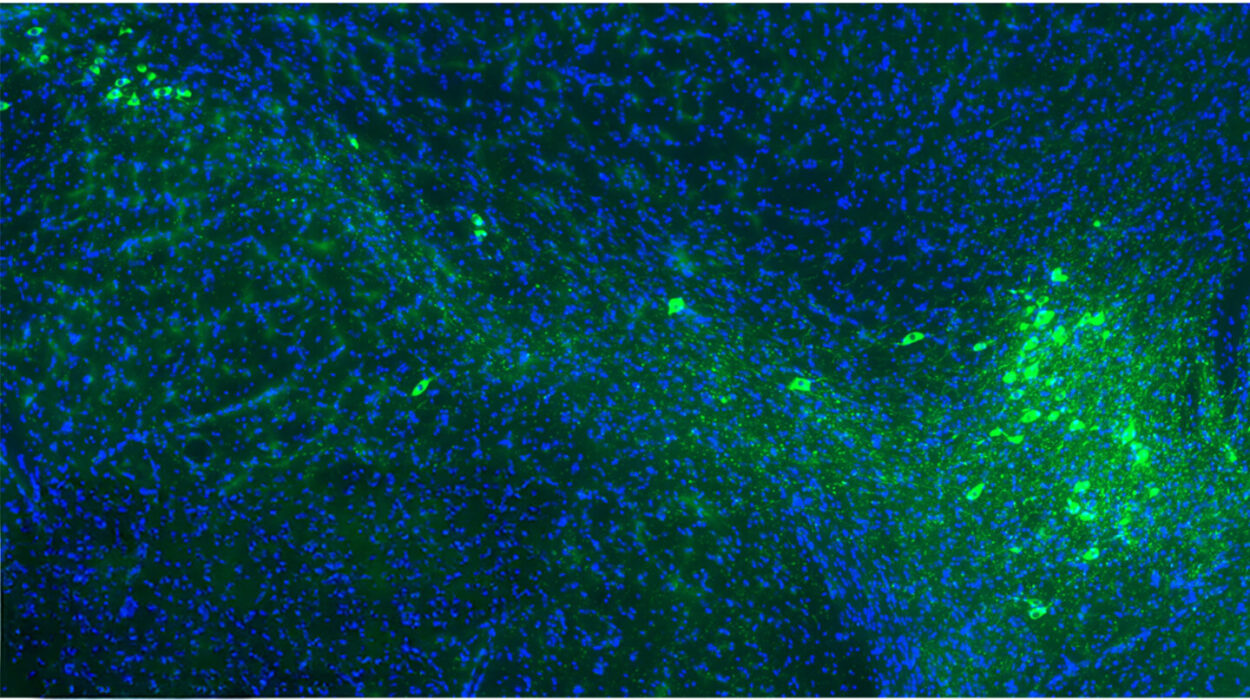
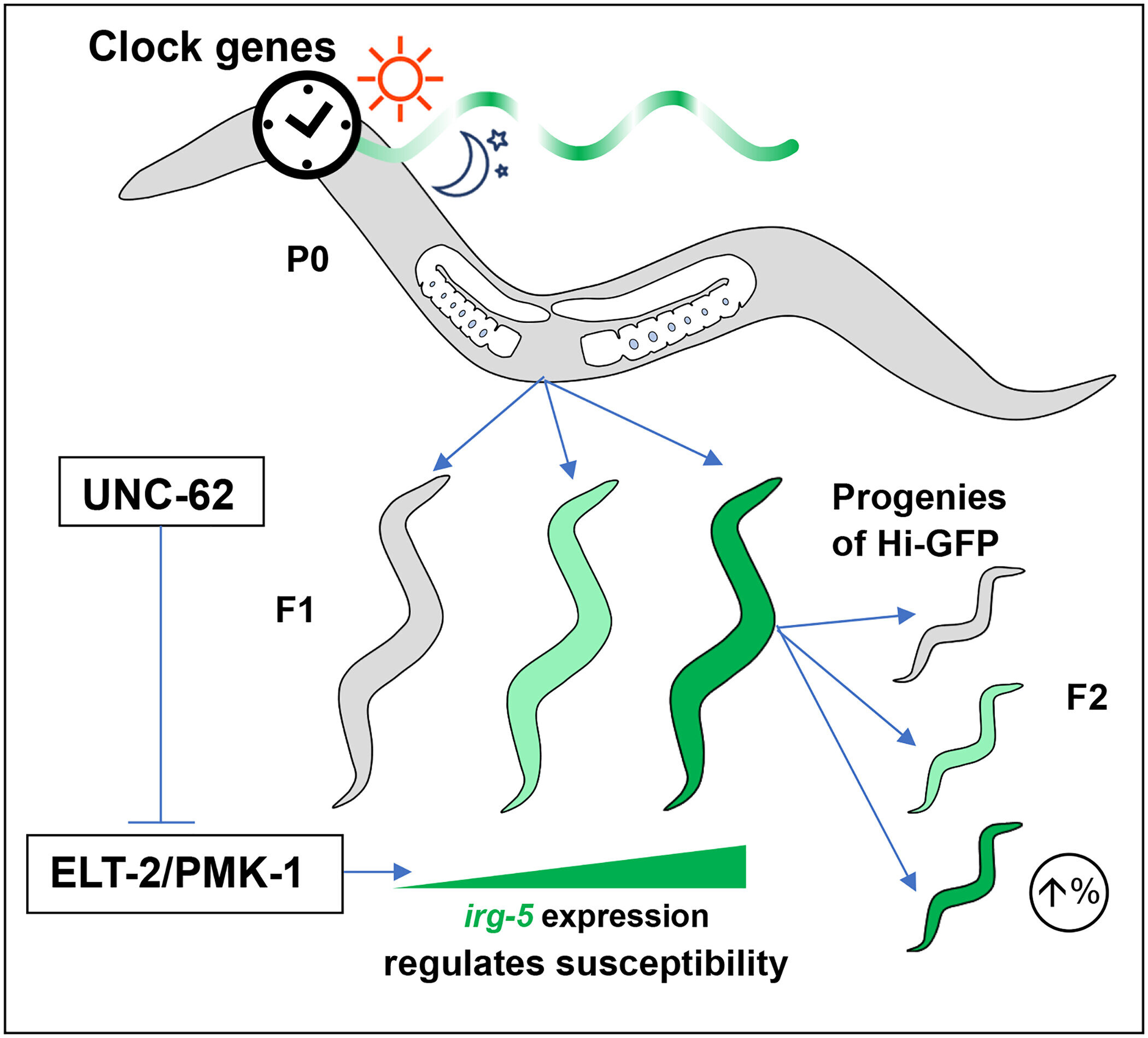
The team used fluorescent reporters—essentially biological lanterns—to watch biomarkers within the immune system light up before and after the organisms were exposed to bacterial infection. Like watching a city’s power grid from above, they could see which individuals were “primed” for a fight and which were already struggling. They noticed that certain individuals began their lives with a higher baseline expression of an inflammation biomarker. These were the individuals who, despite having every genetic advantage, were far more susceptible to falling ill. The researchers had found the “what,” but they still needed to find the “who” or “where” this variation was coming from.
A Legacy Written in Time
The trail led back to the parents. As the researchers tracked the lineage of these variations, they noticed a striking pattern: the maternal circadian rhythm was a dominant factor influencing these baseline immune levels. It wasn’t just about what the mother passed down in her DNA; it was about the internal timing of her own body. This internal clock was somehow reaching across generations to set the thermostat of the offspring’s immune system.
To prove that the clock was indeed the culprit, the scientists began interfering with the specific genes responsible for the internal timepiece. When they disrupted these circadian genes, the influence vanished. The variability in the offspring’s immune systems flattened out, confirming that the mother’s rhythm was the primary source of this biological diversity. “These findings reveal a circadian mechanism that can create significant differences in infection outcomes even when genetics and environment are similar,” Aballay said. It was a breakthrough that suggested our susceptibility to disease is not just a matter of “bad luck” or “bad genes,” but a complex inheritance of biological timing.
The Rhythm of Resilience
This discovery challenges the traditional way we think about health and vulnerability. If a mother’s internal clock can calibrate the immune defenses of her offspring, it opens a new framework for understanding the non-genetic factors that shape our lives. It suggests that the state of our immune system is not a static trait we are born with, but a dynamic condition influenced by the rhythmic cycles of those who came before us. By identifying the key targets in the pathway that regulates the expression of these immune biomarkers, the MD Anderson team has provided a map for future researchers to follow.
The implications for human health are profound, particularly when it comes to the frustrating inconsistency of medical outcomes. “This circadian control may help explain why patients with comparable risk profiles often experience very different responses to infection,” Aballay noted. This research suggests that when we look at a patient’s risk, we may be missing a piece of the puzzle if we aren’t considering the circadian rhythms that helped form their baseline defenses. It moves us away from a one-size-fits-all view of medicine and toward a deeper understanding of individual biological diversity.
Why Time Matters for Our Future
This research matters because it provides a vital clue into the “hidden variables” of human medicine. For decades, the medical community has sought to understand why some patients succumb to infections during disease treatment while others, with the same diagnosis and the same genes, remain resilient. These findings offer evidence that circadian rhythms and other non-genetic factors contribute to a massive amount of immune diversity that we are only just beginning to map.
By exploring the circadian regulation in models like C. elegans, scientists are laying the groundwork for a future of personalized medicine and more effective disease prevention strategies. It raises urgent questions about how our modern, often arrhythmic lifestyles might be echoing into the health of future generations. If we can understand how internal clocks shape immune defenses, we might one day be able to “retune” these rhythms to protect those who are most vulnerable. Ultimately, this study reminds us that we are not just a product of our environment or our ancestors’ DNA, but also the steady, rhythmic beat of the biological clocks that have been ticking since the dawn of life.
More information
Jonathan Lalsiamthara et al, Circadian-shaped immune variability predicts infection outcome, Science Advances (2026). DOI: 10.1126/sciadv.adx8112